LINE Pay’s Japanese service ended on 30 April 2025. Read the details here.

We help businesses accept payments online.
LINE Pay was a smartphone wallet service run by LY Corporation, the parent company of the LINE messaging app. With features ranging from QR code payments to prepaid cards, it had around 44 million users in Japan before its Japanese service closed on 30 April 2025. This article explains what LINE Pay was and how it worked, and which Japanese payment methods merchants can offer instead, such as PayPay, au PAY and Rakuten Pay.
What was LINE Pay?
LINE Pay was a smartphone wallet service offered by the Japanese company LY Corporation. It integrated with the LINE application and its adjacent services. It included various functions including QR code payments at partner stores, money transfers between friends, and the utilization of LINE prepaid cards. In Japan, the service closed on 30 April 2025 and its payment business moved to PayPay, owned by the same group. LINE Pay continues to operate separately in Taiwan and Thailand.
A Short History of LINE Pay
Beginning (2014)
LINE Pay was launched by LINE Corporation in 2014, initially in Japan, as a mobile payment service integrated into the LINE messaging app. It allowed users to make peer-to-peer transfers, pay bills, and make purchases through their smartphones.
Development and Expansion (2015-2017)
Following its successful debut in Japan, LINE Pay embarked on a journey of rapid expansion both domestically and internationally, introducing features like QR code payments, prepaid cards, and loyalty programs. It expanded into other Asian markets through partnerships with local businesses and financial institutions.
Maturation and Diversification (2018–2025)
LINE Pay began focusing on maturing its platform and diversifying its range of services to cater to evolving consumer preferences and market demands. The platform put effort into enhancing security with biometric authentication and diversified its offerings with additional financial services.
In its later years, LINE Pay embraced emerging technologies such as blockchain and artificial intelligence to further innovate its services.
Closure in Japan (2025)
In June 2024, LY Corporation announced it would close LINE Pay in Japan and concentrate its payment services in PayPay, which offered much the same features. New registrations stopped in late 2024, users could transfer their balances to PayPay, and the service ended on 30 April 2025. KOMOJU discontinued its LINE Pay connection at the same time.
Features
Note: this section describes how LINE Pay worked before its Japanese service closed.
To access LINE Pay’s features, users first had to first register for a LINE account on their smartphones
Payment at Partnering Merchants
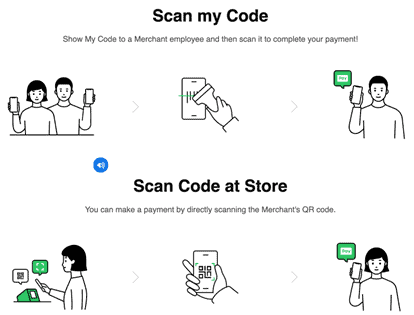
QR and Barcode Payment
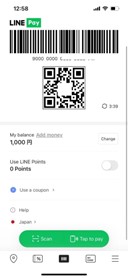
Upon opening the LINE Pay app, users were presented with a barcode and QR code, either of which could be scanned by merchants to complete transactions. Prior to payment, users had to ensure that their digital wallet, referred to as ‘My Balance’, was sufficiently funded.
Scanning a Merchant’s QR Code
Alternatively, users could make payments by scanning the QR code provided by the merchant. LINE Pay also partnered with PayPay, allowing users to complete purchases by scanning PayPay codes.
Tap to Pay With a Prepaid Card
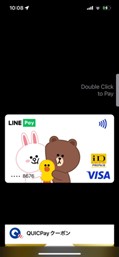
LINE Pay offered its own prepaid card powered by VISA, enabling offline payments via the one-tap function of Apple Pay (for Apple users) or Google Wallet (for Android users). Registering the card to the digital wallet was a straightforward process, only requiring the user to connect their LINE Pay account.
Services For Merchants
Physical stores, such as convenience stores, restaurants, or supermarkets, could select from 3 payment methods for their customers:
1. Payment through a QR Code displayed on a panel
Merchants could display a payment QR code for customers to scan with their smartphones, with no need for extra equipment or app installations. Once their application was approved, they could start using it straight away.
The possibility of signing up as a merchant and the payment services available varied depending on each country’s Privacy Policy for merchant operations. Applying to become a LINE Pay Merchant involved a review process, and applications that didn’t meet the criteria could be rejected.

2. Scanning a QR code from a mountable terminal
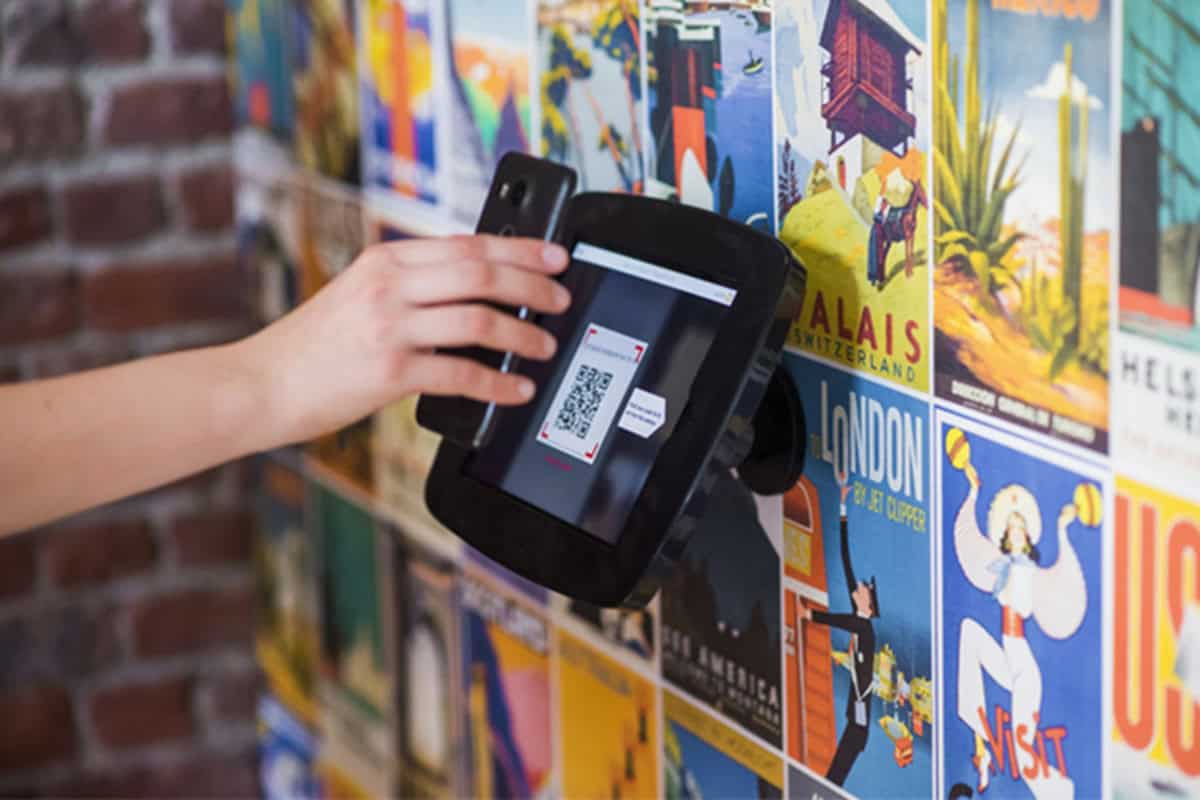
Once the terminal was installed in a shop, staff activated it and entered the amount to finalise the payment. Customers could then scan the displayed amount to pay without entering it manually.
Eligibility and available services varied based on each country’s merchant privacy policies. Applying to become a LINE Pay Merchant involved a review process, and meeting the criteria was crucial to approval.

3. Scanning the customer’s QR code using an app POS
This app offered both payment services and sales promotion features. Once an application was approved, merchants could use it straight away alongside the QR code. Merchant sign-ups and payment services varied based on each country’s privacy policies.

Sending and Receiving Money From Friends
Users could easily send and receive money from friends registered on their LINE account, requiring only sufficient funds in their LINE digital wallet.
Coupons
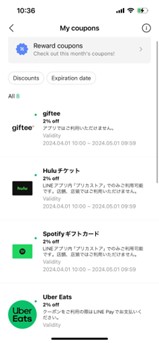
LINE offered a wide variety of coupons to common online and offline stores, including UberEats, Big Camera, and Hulu.
Point Cards
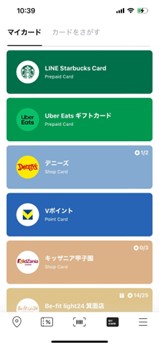
LINE Pay supported the storage of point cards from local merchants and chain stores, offering a convenient accumulation of rewards
Loans
Users with excellent credit scores could apply for loans of up to 500,000 yen, with the process typically completed in just 10 minutes, depending on the results of a background check.
LINE Points
Every payment made through LINE Pay earned users LINE points, which could be redeemed within the LINE app for services such as stickers, games, and gifts.
How LINE Pay Worked
Charging The LINE account “My Balance”
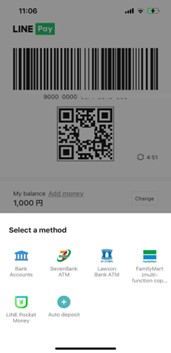
To add money, users opened the LINE Pay app, went to “My balance Add money” under the two codes, tapped the Add Money button, and chose a charging method: direct bank transfers, ATM deposits at convenience stores (7-Eleven, Lawson or FamilyMart), loan options, or automated deposits from bank accounts.
Paying Offline (at Physical Stores)
Either the customer scanned a code at the store, or the store clerk scanned the customer’s code.
Paying Online (at Digital Stores)
For online purchases, users selected the LINE Pay payment method and paid through the LINE Pay app.
How is LINE Pay Differed From Its Competitors
LINE Pay stood out among digital payment platforms due to its seamless integration with the LINE messaging app, offering a range of features that catered to diverse user needs. Unlike many competing platforms, LINE Pay distinguished itself with its emphasis on security, implementing robust measures such as biometric authentication to safeguard user accounts and transactions. This commitment to security reassured users and fostered trust in the platform, especially in regions where digital payment fraud was a major concern.
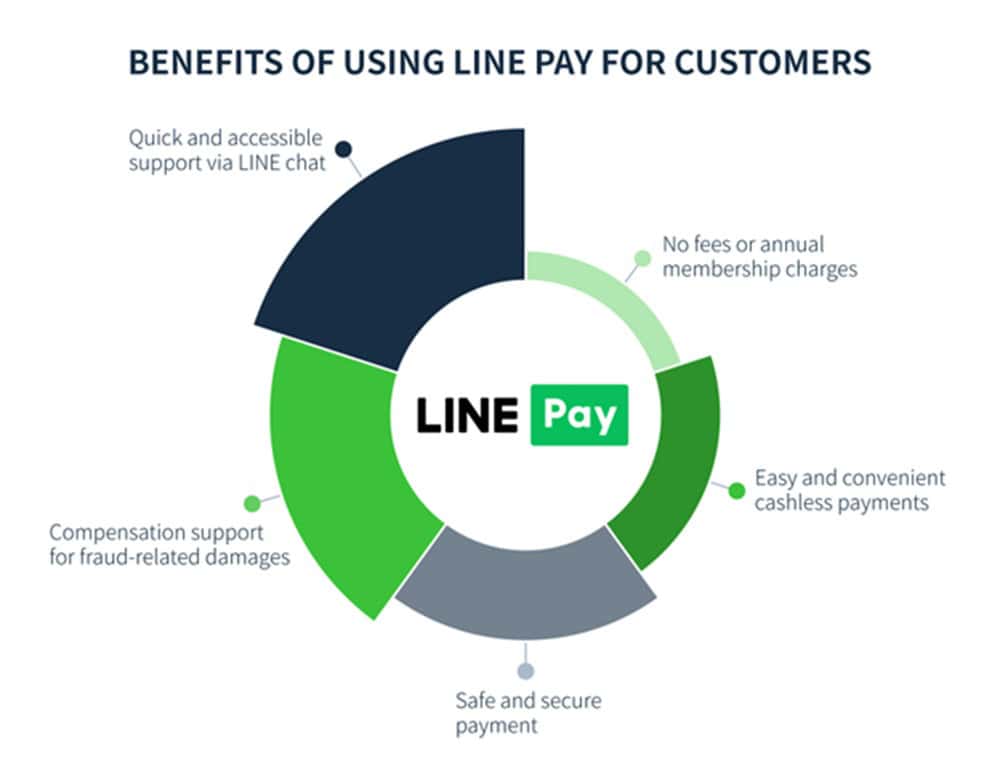
Benefits LINE Pay Offered Customers
1. No fees or annual membership charges
Users could use LINE Pay without paying any registration or usage fees, making it a cost-effective payment solution.
2. Easy and convenient cashless payments
Users could top up their digital wallet directly from their bank account or at a nearby convenience store. Charging was done only using QR codes or barcodes, offering a headache-free and accessible payment experience
3. Safe and secure payment
LINE Pay offered peace of mind thanks to its robust security measures, including face ID or Fingerprint ID authentication for every payment, protecting users’ sensitive financial information. LINE also provided peer-to-peer encryption between users during digital money transactions.
4. Compensation support for fraud-related damages
LINE Pay provided coverage for damages resulting from third-party fraud during transactions, including remittances, payments, and withdrawals, giving users financial protection.
5. Quick and accessible support via LINE chat
In case of confusion, errors or problems, users could get help directly in their LINE app through chat, which made support quick and reliable.
Why eCommerce Merchants Used LINE Pay
1. Easy and quick setup
Merchants could use their existing LINE account to become a LINE Pay merchant. This avoided complex registration procedures and allowed swift integration into the LINE Pay ecosystem
2. Increased shop visits
Merchants could drive traffic to their online store through LINE Pay’s promotional campaigns and rewards, which encouraged users to explore products and services and boosted engagement and conversion rates.
3. Simple and secure payments
Merchants could integrate LINE Pay’s secure payment features into their POS systems and online platforms, giving customers a fast, reliable and secure way to pay.
Integrating LINE Pay with Your Online Store
Note: LINE Pay no longer accepts new merchants in Japan, and the steps below no longer apply. They are kept for reference. For a QR code wallet with a similar reach, see our guide to accepting PayPay.
For sole proprietorships
If you are a sole proprietor, one of the following personal documents are required:
(1) Business certificate:
- National tax/local tax receipt or tax payment certificate
- A copy of the personal business opening notification form (stamped with the tax office reception stamp)
- A copy of the final tax return (stamped with the tax office reception stamp)
- A copy of the blue tax return approval application form (stamped with the tax office reception stamp)
- A copy of the declaration form for starting a personal business (stamped with the reception stamp of the prefectural tax office/municipal office)
(2) Identity verification documents (any of the following):
- Driving license
- Health insurance card
(3) Business license if payment is made at a store
OR
Business license if a business license has been obtained for opening a business
(4) For online payments, please provide product/service explanation materials: Product/service explanation materials (if there are materials other than the application URL information)
For corporations
For corporations, the following documents are required:
- Registered copy (certificate of all historical matters) – Issued within six months
- Business license if payment is made at a store
OR
Business license if a business license has been obtained for opening a business
- For online payments, please provide product/service explanation materials: Product/service explanation materials (if there are materials other than the application URL information)
Integrating Online Payments
There are 2 ways to integrate online payments within LINE Pay: (1) Develop your own connection and apply, and (2) Apply through an affiliated partner.
(1) How to develop and use your own connection
To develop and use your own connection, follow the following 3 steps:
- Check the LINE Pay API guide
- Apply for LINE Pay
- Connection development and operation start.
First, let’s prepare the specifications required for connection development. We provide a sandbox environment, so we will integrate and test LINE Pay in the sandbox. For specifications such as how to apply for an account in Sandbox and the test flow, please refer to “LINE Pay Sandbox”.
Next, apply to become a member store from “LINE Pay Member Store Application”. There are required documents for application, so please prepare them in advance by referring to the information explained in the previous chapter.
Once the review is complete, refer to the materials and carry out the necessary development for connectivity. Additionally, once the review is complete, you will be able to use the “Member Store My Page”. After logging in, check the “Channel ID and Channel Secret Key” required for connection, and if you can set them, you are done.
(2) How to use it via an affiliated partner
There are 2 ways to use our services via our affiliated partners.
Start operation in the following 3 step:
<In case of payment via payment agency>
- Contact the payment agency
- Apply via payment agency
- Start of operation
In the case of a payment agency, first contact the payment agency if you would like to use LINE Pay. Be sure to check the installation costs and fees as well.
Next, apply for LINE Pay via your payment agency and undergo a review.
Once the review is complete, the payment agency will provide you with a dedicated management screen, and you can begin operation.
<If via cart operator>
- Inquire from the cart operator’s website
- Apply for LINE Pay
- Start of operation
If you are a cart operator, please check the introduction method and fees on the cart operator’s website before making an inquiry.
The method for applying for LINE Pay also differs depending on the cart operator, so be sure to check.
Once the review is complete, connect to LINE Pay from the cart operator’s management screen.
If you previously accepted LINE Pay through KOMOJU, you can offer PayPay, au PAY or Rakuten Pay through the same account, with no initial or monthly fees.
Summary
LINE Pay offered a user-friendly and secure platform for both consumers and merchants, facilitating seamless online and offline transactions. Since its Japanese service closed in April 2025, PayPay, which took over its payment business, is the main QR code wallet for merchants to offer in Japan. Our guide to Japan’s payment methods covers the rest.
FAQs
No. LINE Pay’s Japanese service ended on 30 April 2025, and its payment business moved to PayPay. LINE Pay still operates in Taiwan and Thailand.
PayPay is the closest replacement: it’s run by the same group and is Japan’s largest QR code wallet. au PAY and Rakuten Pay are the other big options. KOMOJU supports all three through a single integration.
Foreigners with a LINE account from a country where LINE was permitted could access LINE Pay. Since April 2025, it’s only available in Taiwan and Thailand.
No, neither a credit card nor a debit card are required for LINE Pay. Users can fund their accounts directly from their bank or through a convenience store’s ATM.
No, individuals can become LINE merchants by registering as sole proprietors at their local tax office.
Yes, LINE Pay can be used offline, but users must ensure they have sufficient funds in their account before making a transaction. They can either register a prepaid card for payments via Apple Pay or Google Wallet, or add money at a convenience store ATM.
Yes, if your friend’s LINE account is registered with a Japanese phone number, you can send and receive money internationally. However, transactions are not possible if both accounts are registered in different countries or using phone numbers from different countries.
Conclusion
In a nutshell, LINE Pay added to the digital payments option list by offering a seamless and secure platform. With features like QR code payments, peer-to-peer transfers, and prepaid cards, it catered to diverse user needs. Its closure in Japan is a reminder that Japan’s wallet market is consolidating: for most merchants, PayPay, au PAY, and Rakuten Pay now cover the same customers.
We help businesses accept payments online.