

We help businesses accept payments online.
Overselling happens when a business accepts more orders than its available inventory. In the eCommerce world, this mismatch between digital data and physical stock can lead to significant operational costs and harm both customer satisfaction and brand loyalty.
In this article, we will explain the causes of overselling and provide concrete strategies to prevent it.
What Overselling Means in eCommerce
In eCommerce, overselling means selling more products than are actually available in inventory. This typically occurs when inventory levels are not updated in real time or when the same product is sold across multiple channels without proper inventory tracking. This is particularly important for eCommerce owners, as products can sell out quickly during high-demand events.
Overselling should not be confused with a product being sold out, which simply means customers can no longer purchase the item. With overselling, customers can still place orders even though the product is no longer in stock.
For example, an online clothing store may release 20 units of a limited-edition jacket. If 25 customers successfully place orders before the inventory system updates, the store has oversold by five units—leaving five customers potentially disappointed.
Why Overselling Happens
Overselling typically occurs when inventory data is inaccurate or not updated in real time. This is common when businesses sell across multiple platforms, experience sudden spikes in demand, or rely on manual inventory updates. Inventory not being managed properly can be caused by:
- Synchronization delays: Lag times in updating stock levels between the e-commerce platform and the warehouse.
- Fragmented multi-channel selling: Listing products across various sites without a centralized, real-time tracking system.
- Unexpected demand spikes: Rapid sales during promotions or high-traffic events that outpace system updates.Delays in synchronizing inventory between systems
Inventory Not Synchronized Across Multiple Platforms
Many businesses sell across multiple channels, such as their own websites, online marketplaces, and social commerce platforms. When different inventory systems are not synchronized, stock levels may not update in real time, meaning the inventory displayed on one channel may not match what is physically available.
For example, a product may be sold on a company’s website and on an online marketplace at the same time. The item may still appear available on one platform even though the remaining stock has already been purchased on another.
High Demand During Promotions or Sales Events
Promotions and seasonal sales often trigger a sudden surge in orders, with many customers trying to purchase the same product simultaneously. For example, during Black Friday sales or holiday promotions, inventory sells faster than the system can update, resulting in overselling.
The Negative Impact of Overselling
Overselling may seem like a minor inventory discrepancy, but its long-term consequences can seriously impact operations and customer service. Businesses may need to cancel orders, delay shipments, or issue refunds. This can create dissatisfied customers and additional operational costs.
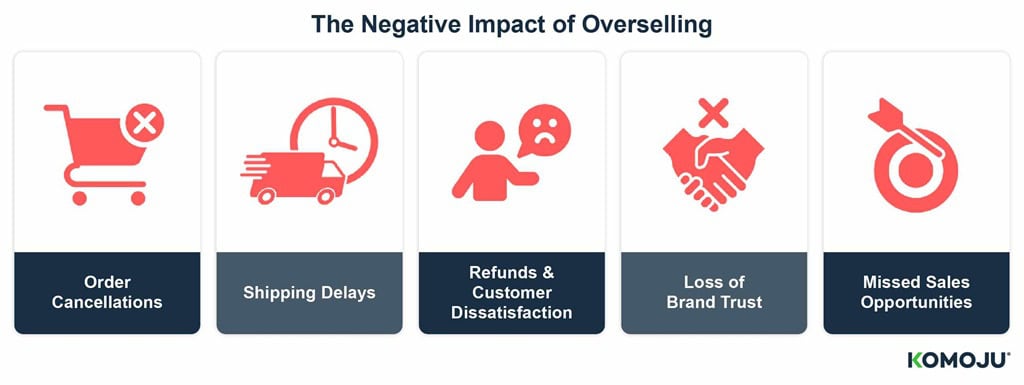
Order Cancellations
Businesses may need to cancel orders when inventory is unavailable. This increases operational workload to identify the affected order and notify customers. Businesses must decide whether to cancel the order, delay shipment, or issue a refund.
Ultimately, overselling triggers a damaging ripple effect: it breeds customer dissatisfaction, spikes customer support volume, inflates administrative overhead, and inflicts lasting damage on brand reputation.
Shipping Delays
When overselling occurs, some businesses attempt to restock products before fulfilling orders rather than canceling them. This can delay delivery times as customers who have already completed their purchase must wait until inventory is available. Unexpected delays can lead to frustration and reduce customer satisfaction, negatively impacting the overall shopping experience.
Refunds and Customer Dissatisfaction
When confirmed orders cannot be fulfilled, businesses may need to issue refunds. Customers who have already paid for their purchase may expect delivery, only to be notified later that the product is unavailable.
This can lead to frustration and disappointment, especially if the item is limited or in high demand. Frequent refunds may also increase administrative and payment processing costs. Over time, this can negatively impact the brand, leading to poor reviews, reduced repeat purchases, and a decline in overall reputation.
Loss of Brand Trust
Overselling can damage customer trust, especially when customers complete a purchase only to learn the product is unavailable. This may create a perception that inventory information is unreliable. Over time, repeated overselling incidents can reduce customer confidence and discourage future purchases.
Missed Sales Opportunities
Furthermore, overselling can also result in missed sales opportunities. When inventory data becomes inaccurate, businesses may temporarily pause sales or limit product availability to avoid further overselling. This can prevent legitimate customers from completing purchases and reduce potential revenue.
How Japanese Consumers React to Overselling
Preventing overselling is particularly important when operating in the Japanese eCommerce market. Japan is known for its high standards of customer service, quality, and attention to detail. As a result, customers often expect:
- Proactive communication
- clear explanations
- sincere apologies
- polite customer service
If overselling is not handled appropriately, customers may express dissatisfaction through reviews or social media. This can quickly impact brand reputation, particularly in a market where trust and reliability are highly valued. Because of these expectations, businesses operating in Japan must handle overselling carefully to maintain customer trust.
How Businesses Can Prevent Overselling
Businesses can reduce the risk of overselling by improving inventory accuracy, using automated systems, and implementing safeguards during high-demand periods.
While these strategies are widely adopted, overselling often occurs due to gaps between systems, especially during high-demand events such as flash sales or seasonal campaigns. The following approaches include practical examples and operational insights to help businesses prevent these issues more effectively.
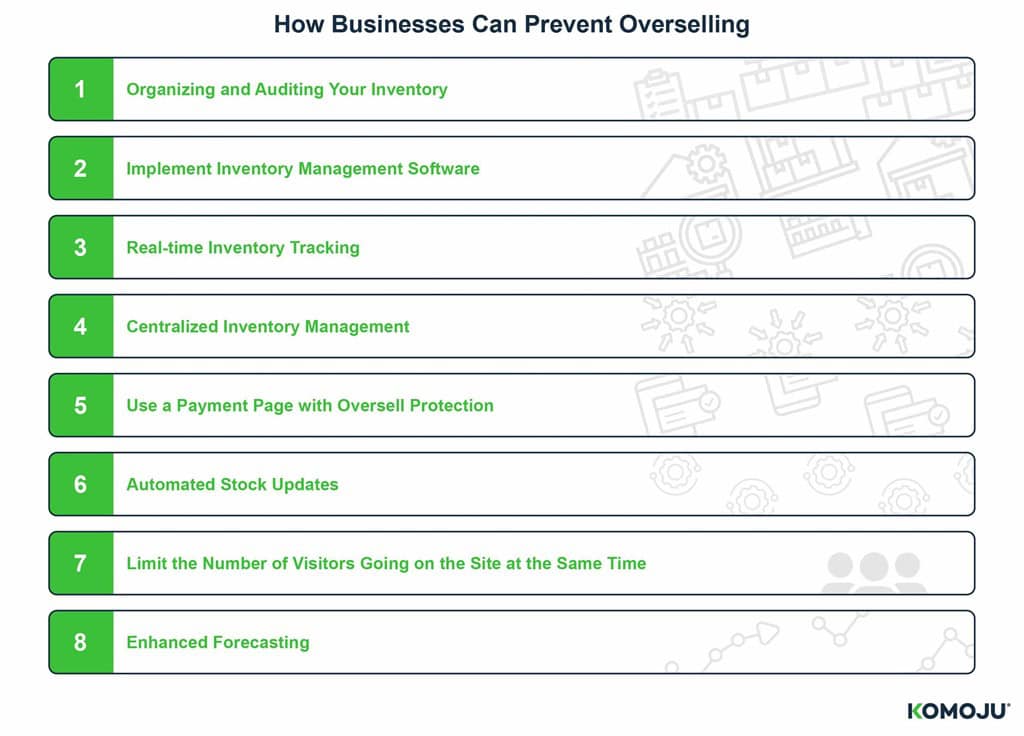
Organizing and Auditing Your Inventory
One way to prevent overselling is to organize and audit inventory regularly. Businesses should conduct routine stock checks to ensure that online inventory matches the physical inventory. This includes reconciling warehouse inventory, removing discontinued products, and verifying SKU accuracy. Maintaining accurate inventory records helps reduce discrepancies and lowers the risk of overselling.
For example, businesses with large product catalogs often discover mismatches between warehouse and online stock due to manual updates or delayed syncing. Regular audits help identify these gaps early, preventing products from being listed as available when they are already out of stock.
Implement Inventory Management Software
Implementing inventory management software can help businesses automatically track stock levels. These systems update inventory in real time, notify businesses when stock is running low, and improve overall stock control. By reducing manual updates and human error, inventory management software helps prevent stockouts and reduces the risk of overselling.
For instance, during limited-time promotions, businesses without automated systems may continue accepting orders even after inventory is depleted due to update delays. In contrast, automated tools ensure stock levels are adjusted instantly, reducing the risk of overselling during peak demand.
Real-time Inventory Tracking
Real-time inventory tracking systems update stock levels immediately after each purchase, allowing businesses to monitor product movement through the supply chain continuously.
They provide businesses with the most accurate data, allowing merchants to respond quickly to changes in stock levels, fill orders quickly, and prevent overselling or having excess stock.
This is particularly important during high-demand product launches, where even a short delay in updating inventory can result in multiple customers purchasing the same item.
Centralized Inventory Management
For businesses that sell across multiple channels, a centralized inventory system lets them manage stock levels across platforms from a single dashboard.
This is important so that when an item sells on one platform, the inventory is instantly updated across all connected channels.
Use a Payment Page with Oversell Protection
Using a payment page with oversell protection can help prevent customers from purchasing unavailable items. With oversell protection, the inventory is verified during the payment process, and if stock is no longer available, the transaction is automatically blocked.
By integrating KOMOJU with Shopify, businesses can enable Oversell Protection to prevent multiple customers from completing payment for the same item. This helps reduce overselling during high-demand sales and ensures that only available inventory can be purchased.
Case study: Case Study: Proactive eCommerce Operations by TSI HOLDINGS Using KOMOJU (Article in Japanese)
Automated Stock Updates
Automated inventory management systems can update inventory across systems without manual input. It integrates barcode scanners, radio-frequency identification (RFID) tags, and inventory management software to monitor stock in real time.
These tools automatically track, control, and optimize inventory levels without manual intervention. This increases efficiency, reduces the risk of human error, and prevents products from remaining available once inventory reaches zero.
Limit the Number of Visitors Going on the Site at the Same Time
During high-demand sales, many customers may attempt to purchase the same product simultaneously. Overselling can be prevented by limiting the number of visitors who can access the checkout page.
Traffic can be controlled through queuing systems or virtual waiting rooms, ensuring that inventory is updated before additional customers complete their purchase.
This approach is commonly used for product drops or ticket sales, where controlling traffic flow not only improves website stability but also prevents multiple customers from purchasing the same limited inventory at once.
Enhanced Forecasting
Improving demand forecasting can also help businesses prevent overselling. By analyzing historical sales data, seasonal trends, and campaign performance, businesses can better predict demand and prepare sufficient inventory.
Businesses can easily view and track their sales data using payment providers like KOMOJU. This helps identify demand patterns and improve inventory planning, reducing the risk of overselling.
How KOMOJU Helps Prevent Overselling
While the approaches above help reduce the risk of overselling, many issues still occur due to gaps between inventory systems and the payment process, especially during high-demand events or when multiple customers attempt to purchase the same item at the same time.
KOMOJU helps address this challenge by adding a final layer of validation at checkout. Even if inventory updates are slightly delayed across systems, KOMOJU verifies stock availability at the moment of payment, ensuring that transactions are only completed for items that are still in stock.
For example, during a flash sale, several customers may try to purchase the last available item simultaneously. While inventory systems may not update instantly, KOMOJU ensures that only the first successful transaction is processed, and any additional attempts are automatically blocked. This helps prevent overselling without negatively impacting the customer experience.
In addition, KOMOJU supports real-time synchronization with platforms like Shopify, allowing businesses to align payment confirmation with actual inventory levels. This is particularly valuable for multi-channel and cross-border eCommerce.
Summary| Prevent Overselling to Improve Customer Satisfaction
Overselling occurs when businesses accept orders for more products than are available in inventory. This often happens from delayed inventory updates, selling products across multiple platforms, or sudden spikes in demand.
By using real-time inventory systems, centralized stock management, and automated updates, businesses can reduce the risk of overselling and provide a more reliable shopping experience for customers.
Businesses can prevent overselling by implementing real-time inventory tracking, centralized management systems, and payment safeguards, such as KOMOJU implemented on Shopify. Preventing overselling improves customer satisfaction, reduces operational costs, and protects brand reputation.
FAQ
What Is Overselling?
Overselling occurs when an eCommerce business sells more items than are available in inventory, often due to delayed inventory updates or high demand.
When Is Overselling Most Likely to Occur?
Overselling is most likely to occur during flash sales, product launches, and high-demand promotions where large numbers of customers attempt to purchase the same item simultaneously.
How Does Oversell Protection Work?
Oversell protection verifies product availability during checkout. If inventory is no longer available, the transaction is blocked. With KOMOJU integrated with Shopify, businesses can enable this feature to prevent customers from purchasing out-of-stock items.
Why Preventing Overselling Is Important for Cross-Border eCommerce
Overselling can be especially challenging for cross-border eCommerce businesses, as it becomes more expensive, slower to resolve, and riskier to customer trust than in domestic sales. This specifically relates to:
- Automated stock updates
Automated inventory management systems can update inventory across systems without manual input. It integrates barcode scanners, radio-frequency identification (RFID) tags, and inventory management software to monitor stock in real time.
These tools automatically track, control, and optimize inventory levels without manual intervention. This increases efficiency, reduces the risk of human error, and prevents products from remaining available once the inventory reaches zero.
- Customers have higher expectations for product availability
International customers often have to wait longer for delivery, pay higher shipping fees, and pay import taxes or duties. As more time and money have already been invested, the experience can feel even more frustrating.
These factors can increase operational costs, extend resolution times, and negatively affect the customer experience; it is important to mitigate them.
We help businesses accept payments online.