
We help businesses accept payments online.
Picture somebody in London or New York shopping online, getting to the checkout and not being able to find their preferred payment method. Most of the time, around 80%, they’ll shrug, pick another option, and complete the purchase anyway.
That’s not how it works in Japan.
Here, over 60% of shoppers abandon their cart entirely when their preferred payment method isn’t available (according to a 2022 survey). Rather than looking for another way to pay, they tend to give up on the purchase altogether.
And one of the methods they most expect to see is one that can feel a little unusual if you’ve only ever sold in the West: paying for an online order in cash, at a convenience store, on foot.
This is a konbini payment. It’s one of Japan’s most-used online payment methods, chosen by more than 20% of online shoppers, and selling into Japan without it means turning away a large slice of your potential customers without even realizing it.
This guide explains:
- what konbini payments are
- why Japanese shoppers deliberately choose them
- who actually uses them
- how the payment flow works for both you and your customer
- how to add konbini to your checkout
What are konbini payments?
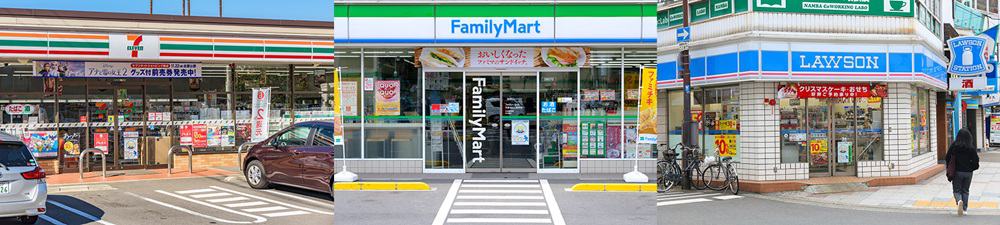
“Konbini” is the everyday Japanese word for a convenience store, short for konbiniensu sutoa. Think 7-Eleven, FamilyMart, Lawson: the brightly lit shops on practically every corner in Japan, open around the clock.
There are now more than 56,000 of them nationwide. They’re woven into daily life far more deeply than most Western shops, handling everything from bill payments and cash withdrawals to parcel pickup, event tickets and printing. Paying for an online order there is just one more errand people already run.
A konbini payment lets a customer buy something online and then pay for it in cash at one of those stores.
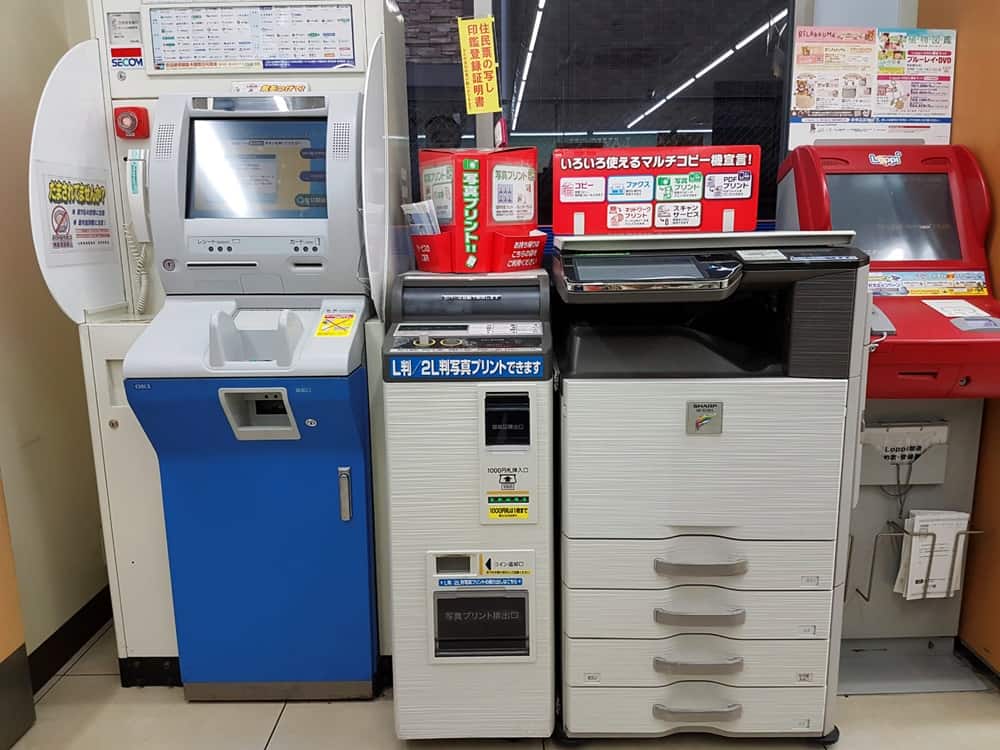
At checkout, instead of entering card details, the shopper selects konbini and receives a payment code by email. They walk to any participating convenience store, enter the code at an in-store terminal (or hand it to the cashier), pay the full amount in cash at the register, and that’s it. Payment confirmation reaches the merchant within about an hour, and the order ships.
There’s no card involved and no bank details to type into an unfamiliar website, just a code and a cash payment over the counter. To Japanese customers, that is convenient and a safe way to buy from online merchants.
To a merchant used to Western markets, this can sound like a relic or a workaround for people who don’t have cards. In reality, it’s nothing of the sort. In the Japanese market it’s a first-choice payment method, chosen by people who have credit cards and debit cards but decide not to use them online.
To understand why so many customers in Japan opt for a convenience store payment over a card, you have to understand Japan’s relationship with cash.
Why do Japanese shoppers choose to pay in cash?
In most Western markets, payment is overwhelmingly digital: cards, wallets, mobile payments, buy now pay later. Cash on delivery exists in a few places, but it’s the exception.
Japan is different. Even in 2026, only about a third of consumer spending in Japan is cashless, well below most comparable economies.
Japan’s cash-to-GDP ratio sits at around 20%, against roughly 8% in the US and under 1% in Sweden. There’s even a word, tansu yokin, literally “savings in the chest of drawers,” for money kept at home rather than in a bank. After decades of near-zero interest rates, there has been little reason to move money out of cash, so people haven’t.
There’s a practical edge too. Japan lives with the regular possibility of earthquakes and typhoons, and cash keeps working when power and networks go down. For a lot of people, that reliability matters.
Then there’s online security. In 2024, credit card fraud losses in Japan hit a record ¥55.5 billion, around $370 million, and the overwhelming majority of it comes from card numbers stolen and used at eCommerce sites. Japanese consumers are genuinely wary of entering card details on a site they don’t already trust, especially a foreign one they’re visiting for the first time.
Put those things together and you get a shopper who might own a credit card, use it happily in person, and still actively prefer to pay for an online order in cash at a konbini.
What cash represents here isn’t only money. It’s the absence of debt, the absence of fraud risk, and something that always works. Konbini payment takes that trust and extends it to online shopping, letting people buy on the internet but pay the way they actually want to.
Who uses konbini payments?
It’s tempting to assume konbini is a niche offering, something for people without bank cards. However, the data says otherwise.
In one survey of Japanese online shoppers, 36.4% said that they like to pay via konbini, so it sits comfortably among the methods people reach for by default. By volume, konbini accounts for close to a fifth of Japan’s online spending.
It cuts across age groups, regions and product categories, too:
- Younger shoppers and students who may not hold a credit card yet, and who like the budgeting control of paying a fixed amount in cash.
- Older consumers who find paying in person simpler and more reassuring than entering card details online.
- First-time buyers from a new brand, where paying cash on collection removes the risk of handing card details to an unfamiliar foreign site.
- Cash-first households who simply prefer to spend from physical money they can see and control
On the product side, konbini is especially strong in a few categories worth knowing about:
- Gaming and digital content. Japan is the world’s third-largest gaming market, and its prepaid-card market was worth over $108 billion in 2024, with gaming and digital content among the strongest categories. Younger buyers of games, in-game currency, manga and streaming top-ups lean heavily on konbini and prepaid methods, often making it the single most important option for this audience.
- Physical retail and DTC. Apparel, beauty, homeware and collectibles are all popular with shoppers that prefer konbini
- Higher-consideration first purchases. When someone is buying from your store for the first time and isn’t sure yet, konbini lowers the trust barrier enough for the customer to place their first order
So konbini isn’t a fallback for a small segment. It’s a mainstream method that a broad cross-section of Japanese shoppers actively prefer.
Read the latest whitepaper about an essential Japanese local payment method, Konbini Payments.
How do konbini payments work?
Behind the scenes, a konbini payment links four parties: the customer, the merchant, a payment service provider such as KOMOJU, and the convenience store itself. The payment service provider holds those relationships together so you don’t have to negotiate with each store chain individually.
For the customer, the flow is simple:
- Choose konbini at checkout. The shopper selects konbini payment (コンビニ決済, konbini kessai) instead of a card.
- Receive a payment code. They’re sent a payment code or reference number by email, along with a transaction summary. (A few older systems still post a paper slip with a barcode, but the code-by-email method is now standard.)
- Pay at the store. The customer goes to any participating convenience store, enters the code at an in-store kiosk to print a short-lived voucher, takes it to the cashier and pays the full amount in cash. Many stores are open 24 hours, so this fits around daily life rather than interrupting it.
- Get confirmation. The store prints a receipt as proof of payment, and confirmation reaches the merchant, typically within an hour.
- The order ships. Because you only ship once payment is confirmed, there’s nothing to charge back and no card to reverse. The transaction is settled before the product ever leaves your warehouse.
The standard payment cap is ¥300,000 per transaction, and larger orders can usually be split across more than one payment. There’s a ¥190 fee charged to the customer per transaction, which is standard across the industry and something Japanese shoppers expect.
The other thing to note is that customers typically get a seven-day window to pay after checkout. That seven-day window tends to alarm merchants new to Japan, since a whole week to pay feels like it will result in drop-off. In practice it isn’t a problem.
For starters, nearly half of Japanese consumers stop by one at least once a week anyway. But on top of that, you’re not exposed: with konbini prepayment, the order only ships once payment clears, so an unpaid voucher costs you nothing.
Which convenience stores accept konbini payments?
Japan’s “big three” konbini chains are 7-Eleven, FamilyMart and Lawson, and between them they cover the overwhelming majority of stores nationwide.
7-Eleven alone runs over 21,000 stores in Japan, with FamilyMart (around 16,000) and Lawson (around 14,000) close behind. In one survey, nearly 80% of Japanese people said they regularly stop at 7-Eleven, with FamilyMart and Lawson both sitting at a little above 60%. But konbini payments aren’t limited to the big names. Through KOMOJU, they’re supported across six chains:
- 7-Eleven
- FamilyMart
- Lawson
- MiniStop
- Daily Yamazaki
- Seicomart
Together that’s the vast majority of Japan’s 56,000-plus convenience stores, a network so dense that for most customers, “pay at a konbini” means a store within a few minutes’ walk.
Why konbini payments are good for your business, not just your customers
It’s tempting to treat konbini as a box you tick to keep a demanding audience happy. It’s really the opposite.
Japanese shoppers bring a different and very deliberate relationship with money, trust and security to your checkout.
You reach customers cards alone would miss. Card-only checkouts quietly exclude everyone who prefers cash, plus younger shoppers who may not hold a credit card at all. One independent study across 50+ payment methods found that simply adding konbini produced a 27% lift in conversion for Japanese customers.
Fraud and chargebacks effectively disappear. Because you don’t ship until cash is confirmed in-store, there’s no card to dispute and no chargeback process to fight. Payment is settled before fulfilment, which counts for a lot in a market where card fraud keeps setting new records.
Confirmation is fast. Unlike a bank transfer that can take days to land and reconcile, konbini confirmation usually arrives within an hour of the customer paying, giving you a clear signal that it’s safe to ship. KOMOJU then pays out your konbini takings on a regular cycle, monthly by default or weekly.
It signals you built your store for Japan. When a Japanese shopper sees konbini at your checkout, it tells them you understand how they pay, which in a market where trust is everything is often what tips a first-time buyer into completing the order.
But a checkout with no konbini option doesn’t only create friction. It signals that your store wasn’t built for Japanese shoppers, and that alone is frequently enough to lose the sale.
Is konbini payment secure?
For the customer, the appeal is simple: no card or bank details are ever entered on your website. The only thing that changes hands online is a payment code. The actual money moves in person, in cash, at a store they already know. There’s nothing sensitive to intercept and nothing stored that could later be exposed in a breach.
For you as the merchant, that same structure removes most of the potential for fraud, too. Because the order isn’t fulfilled until cash is physically paid and confirmed, there’s no stolen-card risk and no chargeback exposure. Each transaction carries a unique reference code, so payments reconcile cleanly against orders.
How konbini differs from card payments

Konbini behaves differently from a card at almost every step, and a few of those differences are worth planning around before you switch it on.
Payment happens in person, not on your site. The customer pays at a store counter rather than entering details at checkout. That physical step is exactly what makes konbini feel safe to Japanese shoppers, and what removes card-fraud risk for you. In cities, where konbini are everywhere, it’s a non-event. In genuinely rural areas it can be a little less convenient, though for most customers a convenience store is already part of the daily commute.
You ship on confirmation, not on order. There’s a short gap between checkout and the customer paying in-store, usually within the seven-day window. The upside is that you never ship before you’ve been paid, which is the whole reason chargebacks disappear. A line in your post-purchase emails reminding customers to pay is all it takes, and committed shoppers follow through reliably.
It’s one piece of a Japan-ready checkout, not the whole thing. Konbini is essential, but it isn’t the only way Japanese people pay. Cards (including JCB, Japan’s home-grown brand), PayPay, Rakuten Pay and bank transfer all serve different segments. The aim is to offer konbini alongside them so each customer can pay the way they prefer.
How to add konbini payments to your store
With KOMOJU, it’s close to plug-and-play:
- Create your KOMOJU account. The application is online and takes a few minutes. You’ll need the standard business verification documents you’d give any payment provider, nothing Japan-specific.
- Quick review. KOMOJU runs a check on your product category and order details.
- Connect your store. Whether you use Shopify, WooCommerce, Wix, Magento or a custom build, connecting KOMOJU adds Japanese payment methods to your checkout with no custom code. On Shopify, for example, it’s Settings → Payments → Alternative Payment Methods → KOMOJU.
- Test before going live. It’s worth running a test konbini payment in particular. The confirmation email is what your customers rely on to pay in-store, so you’ll want to see exactly what they’ll see before you launch.
Most merchants are live within a few days. For full technical detail, see the KOMOJU getting started guide, or download the konbini whitepaper for a deeper dive on the method itself.
Case study: how Steam grew in Japan with konbini
In 2014, Steam was the world’s largest PC gaming platform and growing fast almost everywhere except Japan. Japanese gamers clearly wanted to spend on PC games. The problem was that the Steam experience had been built for a Western audience, and at every step it quietly signalled that it wasn’t built for them.
The interface was in English. Prices were in US dollars. The only way to pay was an international credit card, exactly the method many Japanese consumers don’t hold and the one others least want to enter on an unfamiliar foreign-language site. Customer support ran in English, across an awkward time-zone gap.
KOMOJU had worked with Valve since 2012, when RPG Maker launched on Steam and became an unexpected global hit, a sign that Steam had serious untapped demand in Japan if the platform could actually serve Japanese users.
So KOMOJU helped Steam localise the marketplace for Japan, adding Japanese-language support, yen pricing and konbini alongside other local payment methods, so that checking out felt like any other local online purchase rather than a leap of faith.
The result: in 2016, the year after the localised checkout went live, Japan recorded the fastest growth in Steam users anywhere in the world.
That’s the difference a checkout built for Japanese customers makes. Read more about why local payment methods matter when you expand into a new market.
The bottom line
The konbini payment system can look unusual if you’ve only ever sold in the West. Paying for online transactions in cash, on foot, at a convenience store runs against all conventional Western eCommerce wisdom.
But it makes complete sense once you see it the way Japanese shoppers do: as the safest, most trusted way to buy online without taking on debt or exposing card details. It isn’t a fallback for people without cards. It’s a deliberate choice, and for more than a fifth of Japan’s online shoppers, it’s the choice.
If you’re selling into Japan, konbini isn’t a nice-to-have. It’s one of the clearest signals you can send that you understand your Japanese customers, and one of the lowest-risk ways to take payment you’ll find anywhere.
KOMOJU connects your store to konbini across all six major chains, plus PayPay, Rakuten Pay, bank transfer and the rest of Japan’s payment landscape, through a single integration, with no Japanese legal entity required and no monthly fees.
Frequently asked questions
How does konbini payment work?
At checkout, the customer selects konbini instead of a card and receives a payment code by email. They take that code to any participating convenience store, pay the full amount in cash at the register, and the merchant gets payment confirmation, usually within an hour. The order ships only once payment is confirmed.
How do customers pay a bill at a konbini?
You bring either a barcoded slip or a payment code to the store. If you have a code, you enter it at the in-store kiosk to print a voucher, take that to the cashier, and pay in cash. If you already have a barcoded slip, you hand it straight to the cashier. Either way, you keep the printed receipt as proof of payment.
What are the three main methods of payment in Japan?
Broadly, cash, cards, and digital payments. But Japan’s online checkout is unusually varied, with the average eCommerce store offering nine or more payment methods. Alongside credit cards (including JCB), the essentials are konbini payment, digital wallets like PayPay, loyalty-driven options like Rakuten Pay, and bank transfer (Pay-easy) for higher-value purchases.
How do you pay at 7-Eleven in Japan?
For a konbini payment at 7-Eleven, enter your payment code at the in-store multi-copy terminal to print a payment slip, take the slip to the register, and pay in cash. You can also pay in-store using cash, cards, and wallets like PayPay, but for an online order paid via konbini, it’s the code-then-cash route.
Does konbini work in other countries?
Not as such, because konbini payment is specific to Japan. It runs on Japan’s convenience store networks, so the method itself doesn’t exist elsewhere the way it does here. What does travel is the principle behind it: letting customers pay the way that’s normal for their country rather than forcing a Western default on them. That’s why KOMOJU supports 60+ payment methods across Japan, South Korea, China, Southeast Asia, Europe and Brazil through the same single integration, so if you expand beyond Japan you’re not starting the whole process again.
Does KOMOJU charge monthly fees or payment pricing?
There are no monthly fees, no setup fees, and no Japanese legal entity required. You pay per transaction, the same way you would with any modern payment provider. For konbini specifically, there’s a ¥190 fee per transaction, but that’s paid by the customer rather than you, and it’s standard across the industry, so Japanese shoppers expect to see it. Current per-method pricing is on the KOMOJU pricing page.
We help businesses accept payments online.